
#Ethiopia Rejects Cairo’s GERD Distortions, Reasserts Equitable Abbay Development
Addis Ababa, August 20, 2026 (FMC) — Ethiopia is pushing back against what it describes as a renewed #Egyptian campaign to distort its position on the Grand Ethiopian Renaissance Dam (GERD) and the development of the Abbay River, following recent attempts by Egyptian officials and media outlets to recast remarks by Minister of Water and Energy Habtamu Itefa.
The latest rhetoric comes after a series of reports published by Fana Media Corporation over the past several weeks on the GERD, Ethiopia’s water-resource development strategy and its approach to the equitable use of transboundary waters.
Rather than introducing a new position, the #Ethiopia‘s response reaffirms what has consistently been stated: Ethiopia’s development of the Abbay is rooted in its sovereign development rights, equitable utilization and the pursuit of shared regional benefits.
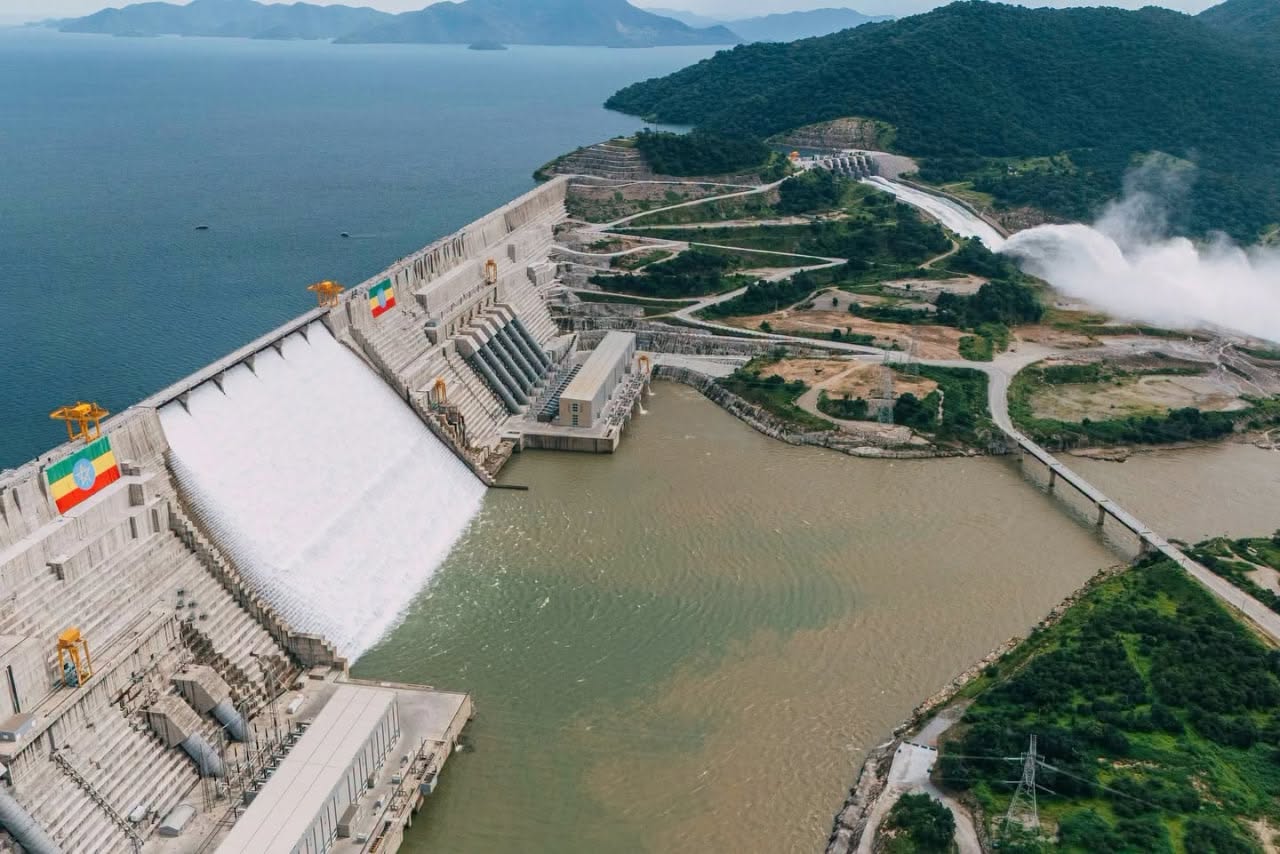
Habtamu Itefa has stressed that the GERD is an engineering landmark constructed according to internationally recognized standards and operating at full capacity for electricity generation.
He has also rejected attempts to portray Ethiopia’s development of its water resources as a threat to downstream countries, emphasizing instead the principle of equitable and reasonable utilization of shared waters.
It is against this backdrop that recent Egyptian portrayals of the minister’s remarks have drawn Ethiopia’s objection.
Statements that selectively recast Ethiopia’s position as an effort to “control” the Nile or impose unilateral arrangements, Addis Ababa argues, deliberately obscure the substance of what was said and seek to present a development project as a geopolitical threat.
The distinction is fundamental. Ethiopia is not seeking to monopolize a shared river; it is asserting the right to develop its own water resources for electricity generation, economic transformation and national development while respecting the legitimate interests of other basin countries.
The GERD itself embodies that development imperative. Built on the Abbay, the dam has transformed Ethiopia’s long-standing aspiration for reliable and large-scale electricity generation into an operational reality.
Its significance extends beyond the power sector, with expanded electricity supply providing a foundation for industrialization, digital transformation, job creation and broader economic growth.
Ethiopia’s water strategy, meanwhile, extends far beyond a single dam. Habtamu Itefa has highlighted the Ethiopian Water Resources Basin Council, established under federal law and chaired by the Prime Minister, as an institutional mechanism for coordinated basin management, equitable resource utilization among regions and long-term planning of water-development projects.
At the regional level, Ethiopia points to practical examples of cooperation that challenge portrayals of its water policy as inherently confrontational.
The minister cited Ethiopia’s supply of 100,000 cubic metres of potable water to Djibouti every day, as well as electricity exports to neighbouring countries, as examples of how the country’s development can generate benefits beyond its borders.
The same principle informs Ethiopia’s support for the Nile Basin Cooperative Framework Agreement (CFA), which Habtamu Itefa described as a historic step toward a more inclusive and equitable basin-wide framework.
The agreement seeks to establish a cooperative foundation for the sustainable utilization of Nile Basin resources rather than preserve arrangements that privilege some countries over others.
This is where Cairo’s latest rhetoric increasingly collides with a changing reality in the basin. Ethiopia’s economy is expanding, its energy demand is rising and its development needs are immense.
The notion that a sovereign upstream country should remain indefinitely constrained from developing its own water resources is increasingly difficult to reconcile with the principles of equitable utilization and shared development.
Egypt’s repeated warnings over Ethiopian dams have also kept alive a broader debate over the legacy of historical Nile-water arrangements.
Ethiopia has long rejected the notion that historical agreements concluded without the participation of all basin countries can permanently determine the development rights of sovereign states upstream.
The latest controversy therefore goes beyond the GERD itself.
At stake is the kind of water order the Nile Basin will embrace: one shaped by inherited privileges and unilateral claims, or one based on cooperation, equitable utilization and the recognition that development must be possible for all basin countries.
Ethiopia’s message remains consistent. The Abbay is a source of development, not confrontation.
Its waters can generate electricity, support economic transformation and contribute to regional prosperity without becoming the property of any single state.
As Cairo intensifies its rhetoric, Ethiopia is insisting that the debate return to facts, science and the principles of equitable use rather than narratives designed to portray its development aspirations as a threat.
The GERD is already generating power.
Ethiopia’s development ambitions are moving forward.
What remains to be built is a more equitable regional understanding—one in which the legitimate development rights of upstream and downstream countries reinforce one another rather than become instruments of perpetual confrontation.