
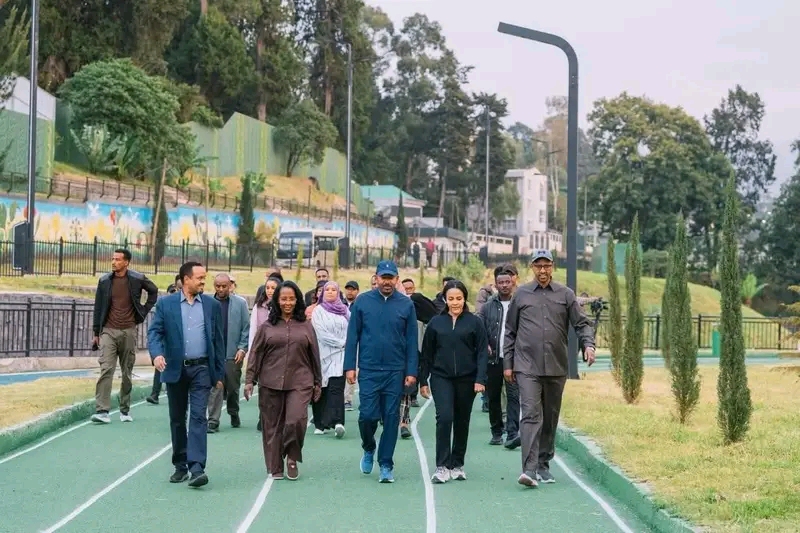
PM Abiy Ahmed Inaugurates 351-Hectare Riverside Dev’t to Advance Addis Ababa’s Green Urban Transformation
Addis Ababa, October 25, 2026 (FMC) — Ethiopian Prime Minister Abiy Ahmed today inaugurated the Kechene–Ambassador–Gihon–Irreecha–Bambis Riverside Development in Addis Ababa, a 351-hectare project spanning a 10-kilometer corridor aimed at advancing the vision of a modern, green and inclusive capital.
In a social media post following the inauguration, the Prime Minister outlined the project’s scale and its contribution to the ongoing transformation of the city.
The development integrates pedestrian walkways, cycling lanes and transport infrastructure to create a more accessible and liveable urban environment. It also features children’s playgrounds, plazas, amphitheaters, sports facilities, and eight fountains and water features, providing additional spaces for recreation, social interaction and community life.
Parking facilities and eight electric vehicle charging centres, capable of charging more than 100 vehicles simultaneously, further expand the corridor’s modern infrastructure.
The project also brings environmental restoration into the wider urban transformation effort. Through river management, soil and water conservation, and riverside green spaces, it seeks to combine improved urban amenities with environmental protection.
PM Abiy further highlighted the project’s economic and livelihood dimensions, noting that a dedicated market centre enables residents who previously lived along the river corridor to produce, display and sell handicrafts. An agricultural produce mall will also connect agricultural producers with markets, expanding opportunities for commercial activity.
Reiterating the broader vision behind the initiative, the Prime Minister said: “Our vision is to build a city that is not only beautiful but also productive and inclusive; a city that serves its people today and generations to come!”
The development brings together public amenities, transport infrastructure, environmental management and economic facilities within a single urban corridor, reflecting an approach to urban transformation that links the quality of the city’s public spaces with environmental sustainability and opportunities for residents.